Guidelines for Authors
Dear authors! Please note: articles that do not meet the journal's requirements will not be accepted by the editors, even for preliminary review!
Authors Guidelines
1. The structure and content of the article
The requirements for the structure and content of the article correspond to the provisions of the National Standard of Ukraine DSTU 7152:2020. Edition. Designing publications in magazines and collections and EASE (European Association of Scientific Editors) Guidelines for Authors and Translators of Scientific Articles to be Published in English.
ELEMENTS OF DESIGN OF THE ARTICLE
1. UDC index.
2. Digital Publication Identifier (DOI).
3. JEL classification code (for economic sciences).
4. Information about the author(s).
5. Title of the article.
6. Abstract.
7. Keywords.
8. Main text of the article.
9. Open Science Declaration.
10. Information about the contribution of the authors.
11. Acknowledgments, sources of funding.
12. References.
13. Information on the dates of submission and editorial processing of the article.
14. Translation of author information, article title, abstract, and keywords into Ukrainian.
15. AI Usage Disclosure (Statement on the use of AI).
16. Ethics Statement (Ethical Declaration).
17. Conflict of Interest Statement.
1. INDEX OF UDC
The index of the UDC is located in the top left hand corner of the page.
Information and bibliographic department of the Scientific Library named after M. Maksymovycha provides paid services for determining the UDC index (UAH 25 per index). The service can be received in the room 24 of the library, or call: (044) 239-33-53 (33-53), or write a letter to the e-mail address bibliograflib@gmail.com , in which you should indicate your name, last name, the position, the title of the article and the abstract of the article .
2. DIGITAL PUBLICATION IDENTIFIER (DOI)
The digital DOI identifier is assigned by the journal publisher. The DOI identifier is placed in a separate line under the UDC index.
3. JEL CLASSIFICATION CODE (for economic sciences)
The Journal of Economic Literature (JEL) Subject Classifier is an internationally recognized code system for defining the subject of economics publications.
You can determine the code for the article using the classifier on the website of the American Economic Association. Authors can also use the Ukrainian translation of the classifier.
4. INFORMATION ABOUT THE AUTHOR(S)
The order of authors must be determined before submitting the manuscript (see "Authorship and co-authorship"). Any changes made after manuscript submission must be approved by all authors. Information about the author should include the following elements:
● First Name Last Name;
● academic degree, academic title;
● ORCID ID unique identifier of the research author.
● corporate e-mail of the author(s);
● the main place of work or study during the research (name of the institution or organization), city, country;
Authors should indicate their affiliation with a specific institution as provided on their institution's official website. Please use your official corporate email when communicating with the Journal's editors.
Abbreviations in the names of academic degrees, academic titles and positions in Ukrainian and English are requested to be submitted in accordance with the table. 1.
Table 1
Abbreviations in the names of scientific degrees, scientific titles and positions
|
Ukrainian |
English |
|
акад. НАН України |
Active Member of the National Academy of Sciences of Ukraine |
|
чл.-кор. НАН України |
Corresponding Member of the National Academy of Sciences of Ukraine |
|
д-р (…) наук |
DSc (…) |
|
д-р екон. наук |
DSc (Econ.) |
|
д-р техн. наук |
DSc (Engin.) |
|
д-р фіз.-мат. наук |
DSc (Phys. & Math.) |
|
канд. (…) наук |
PhD (…) |
|
канд. екон. наук |
PhD (Econ.) |
|
канд. техн. наук |
PhD (Engin.) |
|
канд. фіз.-мат. наук |
PhD (Phys. & Math.) |
|
д-р філософії |
PhD |
|
проф. |
Prof. |
|
доц. |
Assoc. Prof. |
|
докторант |
Doctoral Student |
|
асист. |
Assist. |
|
ст. наук. співроб. |
Senior Researcher |
|
ст. дослідник |
Senior Researcher |
|
мол. наук. співроб. |
Junior Researcher |
|
наук. співроб. |
Researcher |
|
асп. |
PhD Student |
|
ад'юнкт |
PhD Student |
|
студ. |
Student |
|
бакалавр |
Bachelor |
|
магістр (який/а навчається) |
Master's Student |
|
магістр (який/а захистив/ла диплом) |
Master of Arts |
|
ст. викл. |
Senior Lecturer |
|
викл. |
Lecturer |
|
провід. наук. співроб. |
Leading Researcher |
|
голов. наук. співроб. |
Principal Researcher |
|
провід. інж. |
Leading Engineer |
|
інж. |
Engineer |
5. TITLE OF THE ARTICLE
It should be understandable to specialists in other fields, informative and specific: 5-9 words corresponding to the content of the article, without phrases such as " Research question... " , " Some questions... " , " Problems... " etc. For an original research article, it is preferable to add a study descriptor to the title, for example "cross-sectional study", "practical study", "survey results" (see more details on title requirements in the EASE (European Association of Scientific Editors) Guidelines for Authors and Translators of Scientific Articles to be Published in English.
WARNING! Authors submit two versions of the article — with metadata - information about the authors (file Authors. Title of the article) and without metadata (File For review. Title of the article). This is required for double-blind peer review.
6. ABSTRACT
The abstract should reflect the content of the article, as it will be the primary source of information about your research for most readers (many databases contain only the title and abstract).
The abstract of the original research article should be structured and informative, comply with the IMRAD structure and contain the following points:
● Background (actuality, objectives and tasks).
● Methods.
● Results.
● Conclusions.
See example of abstract design in the abstract requirements in the EASE (European Association of Scientific Editors) Guidelines for Authors and Translators of Scientific Articles to be Published in English and Allan Gaw. Writing an Effective Abstract. A study Guide.
The length of the abstract should be not less than 1,800 characters and not more than 2,500 characters (with spaces).
The abstract of a review article can be unstructured, indicative; it should highlight the main theses of the review.
7. KEYWORDS
For an original research article — 4 to 8 keywords.
For a review article - 3 - 6 keywords. Keywords should not repeat the title of the article.
8. MAIN TEXT OF THE ARTICLE
Volume OF THE MAIN TEXT. An original research article — from 3,000 to 8,000 words, review article — from 2,000 to 5,000 words.
STRUCTURE OF THE ARTICLE. An original research paper must be prepared using the IMRAD structure and contain the following basic elements:
● Introduction.
● Methods.
● Results.
● Discussion.
● Conclusions.
The “Discussion” and “Conclusions” sections may be combined.
Detailed requirements for each of the specified structural elements of the article are given in the EASE (European Association of Scientific Editors) Guidelines for Authors and Translators of Scientific Articles to be Published in English.
The review article should also be prepared using the IMRAD structure without the "Methods" section.
ILLUSTRATIONS, TABLES. All figures (schemes, graphs, charts, etc.) and tables must be numbered with Arabic numerals and placed directly in the text, where they should be according to the content (and not at the end of the document).
Explanatory captions should be given to the figures (below the figure, a separate paragraph), and thematic titles to the tables (above the table, a separate paragraph). Captions and titles should reflect the content of images and tables, be concise and informative. Each figure or table should be referred to in the main text of the article and their serial number should be indicated, for example: (Fig. 1), (Table 2).
Example:
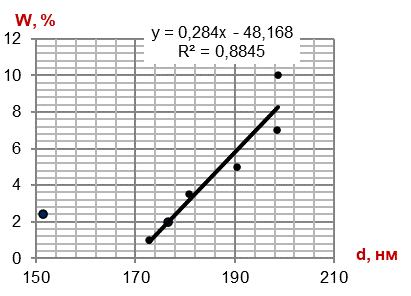
Fig. 1. Title
Table 1
Descriptive statistics for socio-demographic variables
|
Category |
Number of Participants |
Percentage |
|
|
Gender |
Male |
72 |
18.4 % |
|
Female |
320 |
81.6% |
|
|
Permanent Place of Residence |
Settlements < 100,000 |
85 |
21.7 % |
|
Cities 100,000 – 250,000 |
24 |
6.1 % |
|
|
Cities 250,000 – 500,000 |
41 |
10.5 % |
|
|
Cities 500,000 – 1 million |
25 |
6.4 % |
|
|
Cities > 1 million (excluding Kyiv) |
22 |
5.6% |
|
|
Kyiv |
195 |
49.7 % |
|
|
COVID-19 Vaccinations |
Not vaccinated |
137 |
34.9% |
|
Single dose |
11 |
2.8 % |
|
|
Two doses |
168 |
42.9 % |
|
|
Three doses |
71 |
18.1 % |
|
|
Four doses |
3 |
0.8 % |
|
|
Other vaccination options |
2 |
0.5 % |
|
|
Religiosity |
Not religious at all |
46 |
11.7 % |
|
Not religious, some spiritual inclination |
69 |
17.6 % |
|
|
Somewhat moderate in religiosity |
167 |
42.6 % |
|
|
Religious and active |
103 |
26.3 % |
|
|
Very religious |
7 |
1.8 % |
|
Upon acceptance of the article, authors must upload separate high-resolution files for all figures in .tif or .jpg format. File names for informational graphics must be clear and correspond to the labels used in the text (e.g., Figure 1, Figure 2). Image resolution requirements are as follows: 1200 dpi for line art, 600 dpi for grayscale, and 300 dpi for color images.
9. OPEN SCIENCE
The journal supports the principles of Open Science aimed at ensuring transparency, reproducibility, and accessibility of research results. This involves not only publishing the text of the article but also providing access to the primary data. Authors must provide access to datasets, materials, and methodology used in the study via open repositories. Each dataset or material must have a DOI (Digital Object Identifier) or another persistent identifier.
Recommended repositories: PsychArchives, Zenodo, OSF (Open Science Framework) or the official KNU repository eKNUTSHIR.
Example:
The research data are available in the PsychArchives open repository: Author, A. A. (2025). Name of data set [Data Set]. DOI: 10.1234/abcd5678
A dataset is an independent scientific object and must be included in the reference list as follows: Author, A. A. (Year). Name of data set [Data Set]. [Doi]
The guide "Scientific Data and Preprints in Zenodo: How to Publish in the Taras Shevchenko National University of Kyiv Community and Assign a DOI" is available in Ukrainian on the website of the M. Maksymovych Scientific Library.
10. INFORMATION ABOUT THE CONTRIBUTION OF AUTHORS. It is necessary to indicate information about the contribution of the authors to the preparation of the article according to CRediT (Contributor Roles Taxonomy):
● Conceptualization. Ideas; the formulation or evolution of overarching research goals and objectives.
● Formal analysis. Application of statistical, mathematical, computational or other formal methods for analysis or synthesis of empirical research data.
● Software. Programming, software development; design of computer programs; implementation of computer code and auxiliary algorithms; code component testing.
● Methodology. Development or design of methodology; creating models.
● Data validation. Checking the reproducibility of results/experiments and other research results.
● The writing is an original draft. Writing the initial version (draft) of the article.
● Writing — revision and editing. Making significant changes and additions to the article.
Example:
Name, surname — conceptualization, methodology;
First name, last name — software, formal analysis;
Name, surname — data validation, spelling — original draft;
Name, surname — writing — viewing and editing.
11. ACKNOWLEDGMENTS, SOURCES OF FUNDING
Mention all people who have made significant contributions to the research but are not co-authors: coordinated the execution of the research activities, provided resources (research materials, reagents, laboratory specimens, animals, instruments, computing resources, or other analysis tools).
Specify all funding sources using the appropriate template:
· If funded by a grant:
Funding sources: This study was supported by [Full name of donor organization/grantor/fund] (Grant/Project No. [number]).
· Internal / Planned Institutional R&D:
Funding sources: The authors received no targeted grant funding for this study. The work was performed within the framework of planned research work of [Full name of university/institution].
· No external funding:
Funding sources: The authors declare that no external funding was received for conducting this study or preparing the manuscript.
See more details on p. 3 EASE (European Association of Scientific Editors) Guidelines for Authors and Translators of Scientific Articles to be Published in English
12. REFERENCES
Bibliographic entries in the list of bibliographic references are given according to the bibliographic style of citation - APA style references (7th Edition).
Sources in the list of used sources are not numbered and are presented alphabetically.
A DOI (if available) must be provided for each source.
The article in English provides ONE list of used sources — References, in which the bibliographic description of sources that are not in Roman script (Cyrillic, Arabic, Chinese, etc.) are given in English translation. Indicate at the end of the bibliographic description in square brackets in English the source language: [in Ukrainian], [in Chinese], etc. and add a bibliographic description in the source language in square brackets. Example:
● Zhenchenko, M. (2019). Digital transformation publishing industry. Zhnets [in Ukrainian]. [Zhenchenko, M. (2019). Digital transformations of the publishing industry. Reaper].
FORMAT OF REFERENCE TO SOURCES IN THE TEXT. In-text vocations are given in round brackets with the indication:
● the last name of the author (if the author is one) or the first word of the title of the work (for publications without authors), followed by a comma and the year of publication and, if necessary, followed by a comma of the pages after the abbreviation "c." (in Ukrainian) or "p." (in English). The title of the work can be abbreviated, and the omitted words are marked with the sign "three dots"):
(Freeberg, 2019), (Freeberg, 2019, p. 147), (Freeberg, 2019, pp. 56–57), (Scientific heritage..., 2017, p. 45), (Pravdyviy, 2018, p. 184–185 );
● surnames of all co-authors (if there are no more than three authors), year of publication:
(Dormus, Brown & Bloom, 2013);
● surnames of only the first co-author, abbreviation "etc." or "et al.", year of publication (if there are more than three authors):
(Grady et al., 2019), (Nazarenko et al., 2022);
● surname and initials of the author, year of publication (if the article contains references to the works of authors with the same last name, published in the same year):
(Reinberg T., 2005);
● the author's surname, the year of publication of the first work, the year of publication of the next work (if the article contains references to the works of the same author, published in different years, the author's surname is not duplicated):
(Gibson, 2007, p. 115; 2010, pp. 73–75);
● surname of the author, year of publication, lowercase Latin letter after the year of publication (if the article contains references to the works of one author, published in the same year):
(Gibson, 2005a; 2005b; 2005c);
● indicating the number or name (if there is no number) of the part of the electronic source (volume, part, chapter, etc.) with a comma after the year of publication, if the pages are not numbered.
(Brown, 2017, vol. 2).
Citations to several sources at the same time are presented after a semicolon in alphabetical order by the first letter of the author's last name of each source or the title of the work for publications without an author. For example, researchers studied a certain problem: (Freeberg, 2019; Grady et al., 2019).
The main part of the references in the publication should be to authoritative sources of the last 5-7 years of publication. The list of references should consist of at least 30% of articles published in rating journals that are indexed in the scientometric databases Scopus and Web of Science. Self-citation should not exceed 15% of the total number of cited sources.
Examples of bibliographic entries according to APA style references
Book edition
Author, AA (year of publication). The name of the book. Publishing house.
● Covey, SR (2013). The 7 habits of highly effective people: Powerful lessons in personal change. Simon & Schuster.
For electronic books or books that have electronic versions, at the end of the bibliographic description, indicate the URL, for example:
● Vendsen, S., & Løber, L. (2020). The big picture/Academic writing: The one-hour guide (3rd digital ed.). Hans Reitzel Forlag. https://thebigpicture-academicwriting.digi.hansreitzel.dk/
● Brück, M. (2009). Women in early British and Irish astronomy: Stars and satellites. Springer Nature. https:/doi.org/10.1007/978-90-481-2473-2.
● Zhenchenko, M. (2019). Digital transformations of the publishing industry. 2nd ed., changes. Reaper. https://www.zhnets.com.ua/zhenchenko-maryna- tsyfrovi- transformatsiyi-vydavnychoyi-galuzi-kyyiv-zhnets-2019-2-ge-vyd-zmin-409-s/
Article in the Journal
Author, A. A., Author, B. B., & Author, C. C. (Year). Title of article. Title of Periodical, volume number (issue number), pages. https://doi.org/xx.xxx/yyyy
● Grady, JS, Her, M., Moreno, G., Perez, C., & Yelinek, J. (2019). Emotions in storybooks: A comparison of storybooks that represent ethnic and racial groups in the United States. Psychology of Popular Media Culture , 8 (3), 207–217. https://doi.org/10.1037/ppm0000185
Presentation at the conference
Author, AA (year, month, date of conference). Title of the presentation [Presentation at the conference]. Name of the conference, venue of the conference. url
Evans, AC, Jr., Garbarino, J., Bocanegra, E., Kinscherff, RT, & Márquez-Greene, N. (2019, August 8–11). Gun violence: An event on the power of community [Conference presentation]. APA 2019 Convention, Chicago, IL, United States. https://convention.apa.org/2019-video
Conference materials, published in the collection of conference materials
Author, AA (year). Publication title. In Surnames of the editors of the collection (ed.), Name of the conference: No. Title (pages). Publisher. url
Bedenel, A.-L., Jourdan, L., & Biernacki, C. (2019). Probability estimation by an adapted genetic algorithm in web insurance. In R. Battiti, M. Brunato, I. Kotsireas, & P. Pardalos (Eds.), Lecture notes in computer science: Vol. 11353. Learning and intelligent optimization (pp. 225–240). Springer. https://doi.org/10.1007/978-3-030-05348-2_21
Dissertation
Author, AA (year). Dissertation title [Doctoral dissertation manuscript]. The name of the university where the thesis was defended.
● Harris, L. (2014). Instructional leadership perceptions and practices of elementary school leaders [Unpublished doctoral dissertation]. University of Virginia.
Normative legal acts, standards
● Verkhovna Rada of Ukraine. (2019). On ensuring the functioning of the Ukrainian language as the state language (Law of Ukraine dated April 25, 2019 No. 2704-VIII). https://zakon.rada.gov.ua/laws/show/2704-19
● International Organization for Standardization. (2018). Occupational health and safety management systems—Requirements with guidance for use (ISO Standard No. 45001:2018). https://www.iso.org/standard/63787.html
You can also see detailed requirements and examples of bibliographic entries at: Publication Manual of the American Psychological Association (APA), 7th Edition and in Examples of Citations according to APA (7th ed.) in the list of sources used.
To correctly compile bibliographic records in the list of used sources, you can use specialized programs, for example: https://www.grafiati.com/uk/
WARNING! Scientific library named after M. Maksymovicha provides paid services for design and editing of lists of used sources.
13. INFORMATION ON THE DATES OF SUBMISSION AND EDITORIAL PROCESSING OF THE ARTICLE
At the end of the article, information is provided in the format:
Отримано редакцією журналу / Received: 25.01.25
Прорецензовано / Revised: 16.02.25
Схвалено до друку / Accepted: 13.05.25
Опубліковано / Published:
14. TRANSLATION OF AUTHOR INFORMATION, ARTICLE TITLE, ABSTRACT, AND KEYWORDS.
Information about the title of the article, information about the author(s), abstract (at least 1,800 characters) and keywords of the article in English for Ukrainian-language articles or in Ukrainian for English-language articles are provided at the end of the article after the list of sources used and the date of receipt of the article.
If the author is unable to provide a translation from English into Ukrainian, the editorial office will perform the translation.
15. AI USAGE DISCLOSURE
Authors are required to clearly state how and which specific AI tools were used during the research or manuscript preparation.
NB! In articles, this section is provided in two languages: Ukrainian and English.
Permissible Use of AI:
● For technical assistance: Grammar checking, stylistic editing, translation, pre-processing of large datasets, classification, and statistical models, provided these are clearly described in the methodology. When using AI tools for data analysis, authors must explicitly describe the analysis procedure, including the AI tools used, in the "Materials and Methods" section.
● For illustrative purposes: Creating diagrams, charts, or visualizations that do not distort the research content. If AI tools were used to generate images or other visual materials, authors must state this in the captions of the respective elements and in the relevant section.
● For literature search and formatting: Auxiliary use of AI systems to identify relevant sources, subject to subsequent verification by the author.
The author bears sole responsibility for the content of the article. Authors must carefully verify any text, data, or images generated by AI tools for accuracy, contextual appropriateness, and the absence of bias or errors.
Prohibited Use of AI:
● Generating scientific content (hypotheses, conclusions, interpretations) without critical verification by the author.
● Using AI for data falsification or creating fabricated results.
● Concealing the fact that AI was applied during the research or writing process.
Examples:
IF AI WAS NOT USED
Declaration of Generative AI and AI-Assisted Technologies. During the preparation of this work, the author did not use artificial intelligence tools.
Декларація про генеративний штучний інтелект та технології, що використовують штучний інтелект. Під час підготовки цієї статті автор не використовував інструменти штучного інтелекту.
IF AI WAS USED
Declaration of Generative AI and AI-Assisted Technologies. During the preparation of this work, the authors used ChatGPT to search for scientific literature. Following the use of this tool, the authors reviewed, verified, and analyzed the suggested sources.
Декларація про генеративний штучний інтелект та технології, що використовують штучний інтелект. Під час підготовки цієї статті автори використовували ChatGPT для пошуку наукових джерел. Після використання цього інструмента автори перевірили та проаналізували запропоновані джерела.
16. ETHICS STATEMENT
If the manuscript includes results of research involving human participants or animals, the editorial board requires authors to provide copies of approvals from bioethics committees (commissions). Approvals must be officially documented (certificates, extracts from protocols, references), registered, and signed by authorized persons (e.g., a decision of the Bioethics Committee for Scientific Research of Taras Shevchenko National University of Kyiv).
NB! In articles, this section is provided in two languages: Ukrainian and English.
A copy of the permit must be submitted alongside the manuscript as a separate file (File type: "Ethics Statement").
Examples:
Ethical Statement. This study is a theoretical analysis of public sources and does not involve direct interaction with humans or animals. Accordingly, formal ethical approval was not required for this type of research.
Етична декларація. Дослідження є теоретичним аналізом відкритих джерел і не передбачає безпосередньої взаємодії з людьми чи тваринами. Відповідно, отримання спеціального етичного висновку для такого типу дослідження не потрібно.
Or:
Ethical Statement (Sample) The study was approved by the Ethics Committee of the Public Organization "Ukrainian Association of Educational and Developmental Psychology" (Protocol No. 1 dated April 30, 2026). All study participants provided written informed consent for their participation and the publication of the obtained data. The authors guarantee full anonymity and confidentiality of personal information.
Етична декларація (ПРИКЛАД). Дослідження схвалено Етичною комісією ГО "Українська асоціація психології освіти та розвитку" (протокол № 1 від 30.04.2026). Усі учасники дослідження надали письмову інформовану згоду на участь та публікацію отриманих даних. Автори гарантують повну анонімність та конфіденційність персональної інформації.
17. CONFLICT OF INTEREST
Authors must clearly disclose any potential conflicts of interest, including financial, professional, or personal circumstances that could have influenced the research results.
NB! In articles, this section is provided in two languages: Ukrainian and English.
Examples:
FOR A SINGLE AUTHOR
The author declares no conflicts of interest. The funders had no role in the design of the study; in the collection, analyses or interpretation of data; in the writing of the manuscript; in the decision to publish the results.
Автор заявляє про відсутність конфлікту інтересів. Спонсори не брали участі в розробленні дослідження; у зборі, аналізі чи інтерпретації даних; у написанні рукопису; в рішенні про публікацію результатів.
FOR TWO OR MORE AUTHORS
The authors declare no conflicts of interest. The funders had no role in the design of the study; in the collection, analyses or interpretation of data; in the writing of the manuscript; in the decision to publish the results.
Автори заявляють про відсутність конфлікту інтересів. Спонсори не брали участі в розробленні дослідження; у зборі, аналізі чи інтерпретації даних; у написанні рукопису; в рішенні про публікацію результатів.
FOR AN AUTHOR WHO IS AN EDITORIAL BOARD MEMBER
The author (one of the authors) is the editor-in-chief (a member of the journal editorial board), therefore did not take part in the peer-review process or in the decision to publish of this article.
Автор (один з авторів) є головним редактором (членом редколегії) видання, тому не брав участі у рецензуванні та прийнятті рішення щодо публікації цієї статті.
/First name, Last Name/ is the a member of the journal editorial board, therefore did not take part in the peer-review process or in the decision to publish of this article.
The authors declare no conflicts of interest. The funders had no role in the design of the study; in the collection, analyses or interpretation of data; in the writing of the manuscript; in the decision to publish the results.
/Ім'я, прізвище/ є членом редколегії видання, тому не брав участі у рецензуванні та прийнятті рішення щодо публікації цієї статті.
Автори заявляють про відсутність конфлікту інтересів. Спонсори не брали участі в розробленні дослідження; у зборі, аналізі чи інтерпретації даних; у написанні рукопису; в рішенні про публікацію результатів.
2. Requirements for the technical design of the article
The technical design of the article must meet the requirements of the Publishing and Printing Center of Taras Shevchenko Kyiv National University , in particular:
1. The text must be submitted as a WinWord file (*.doc) or a TeX file without using style marking.
2. Page parameters:
● line spacing – single;
● paragraph indentation – 0.5 cm;
● format – A4;
● fields:
|
upper |
2.54 |
lower |
2.0 |
|
the left |
1.8 |
right |
1.8 |
|
from margin to header
|
1.7 |
||
|
from margin to footer |
1.7 |
||
3. Formatting parameters of structural elements:
● UDC index (JEL, DOI) – Arial, 9 pt, bold;
● information about the author(s) – Arial, 9 pt, bold;
● the title of the article is Arial, 10 pt, semi-bold, all capital letters;
● abstract (in Ukrainian and English) – Arial, 9 pt, italics;
● points in structured annotation ("Relevance"...) – Arial, 9 pt, bold italics;
● the main text of the article (with tables and figures) – Arial, 10 pt, normal;
● the list of sources used is Arial, 8 pt, normal;
● between sections of the article - a space of one line.
4. Additional requirements for the text of the article:
● enter each abbreviation in the text in brackets after the first mention of the corresponding full phrase; only then you can use the entered abbreviation;
● submit all citations in the language of the article (regardless of the language of the original), necessarily accompanying them with links to the source and a specific page;
● mark missing places of quotations with square brackets with three dots: […];
● formulas in articles can only be typed using a formula editor (Microsoft Equation or MathType Equation), the font of the main characters is Arial, size 11;
● between the numerical value and the abbreviated name of the unit of measurement of the value, put a continuous interval (Ctrl+Shift+Space);
● adhere to the following format of graphic signs: quotation marks "…", apostrophe …'…, dashes … – … (you should use a short dash [–], not a long one [—] or a hyphen [-]);
● put a dash on the designation of the range (from ... to ...): p. 1995–1997, 1930–1940s, April–May, Kyiv–Lviv;
● do not allow the replacement of Latin letters with Cyrillic letters and vice versa (for example, Latin o, a, c, x, p, e, H, T, I, M, B with Cyrillic letters o, а, с, х, р, е, Н, Т, И, М, В), especially in the surname and first name of the author, title of the article, abstract, keywords, bibliographic citations, as this may cause erroneous indexing of the publication and make it impossible to identify it in search and bibliometric systems.
Example: